Now accepting new patients. (305) 672-8676

Clinical Note
Stress & Neck Tension
A clinical note from the practice
Published by Dr. Todd Narson, DACBSP®
The neck is where stress lives first
The link between
stress & neck tension.
Stress affects everyone differently, but one of the most common physical reactions is muscle tension — especially in the neck and shoulders. Here's what's actually happening in your body — and what to do about it.
T
Dr. Todd Narson
DACBSP® · Miami Beach, FL · In practice since 1990
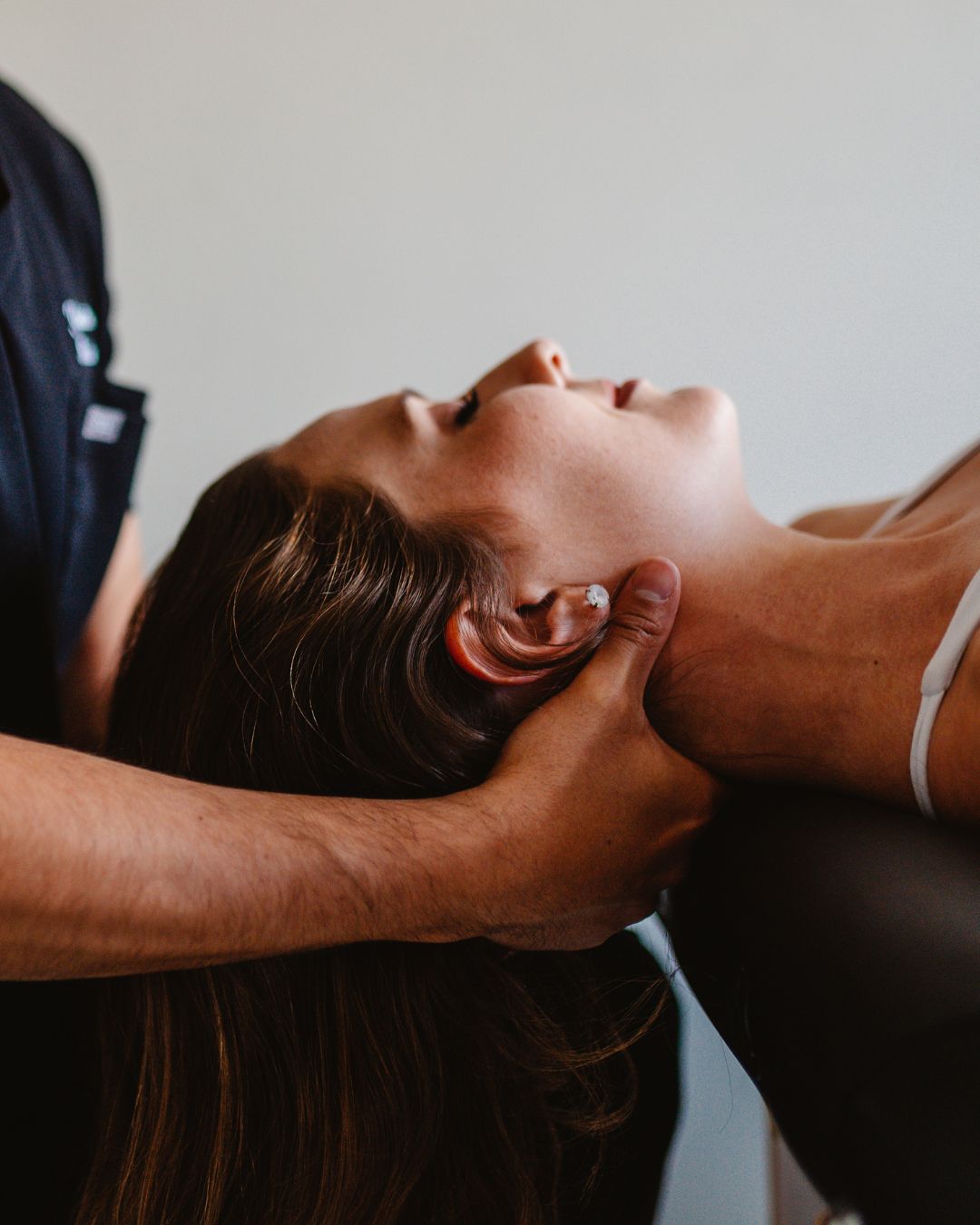
I. How stress impacts the body
The fight-or-flight response.
W
e frequently see patients whose neck stiffness, headaches, or shoulder discomfort began or worsened during periods of high stress at work, during training, or in daily life. Understanding how stress contributes to neck
tension is the key to preventing chronic discomfort — and to improving overall movement and performance.
When your body perceives stress, it activates the fight-or-flight response. Hormones such as cortisol and adrenaline prepare the body for action by increasing heart rate, blood pressure, and muscle tone. In short bursts, this is a normal and adaptive response.
But when stress becomes chronic, muscles — particularly those in the neck and upper back — stay in a semi-contracted state. This ongoing tension reduces circulation, limits joint mobility, and contributes to trigger points, headaches, and fatigue over time.
Fig. 1 — The stress-tension cycle
How short-term stress becomes chronic tension.
1
Stress Trigger
Work deadline, training load, daily life pressure.
2
Cortisol Release
Heart rate, blood pressure, and muscle tone all increase.
3
Muscle Contraction
Neck & upper back stay in a semi-contracted state.
4
Trigger Points & Fatigue
Reduced circulation, joint restriction, headaches.
When stress stays chronic, the cycle loops back on itself — and the body's "emergency response" becomes your daily baseline.
II. Neck muscle tension explained
A complex system,
taking the hit.
T
he neck contains a complex system of muscles responsible for supporting and stabilizing the head. When these muscles are under prolonged tension — or asked to hold poor posture for hours, like at a computer or on a phone —
they shorten and fatigue. That creates joint restrictions and faulty movement patterns.
Over time, this sets off a cycle of stiffness and pain that affects how you move, train, and recover. The initial cause may be emotional or situational, but the consequences are structural.
Our approach identifies which joints and soft tissues are under abnormal stress, then works to restore balance through precise manual therapy, soft-tissue release, corrective exercise, and postural retraining. The goal is simple: break the cycle before it becomes a chronic problem.
“
The initial cause may be emotional or situational — but
the consequences are structural.
The initial cause may be emotional or situational — but the consequences are structural.
Dr. Todd Narson · DACBSP® · Miami Beach Family & Sports Chiropractic Center
Section III · What Helps
Two ways to reduce tension.
Relieving neck tension starts with understanding the cause. Some strategies you can practice on your own — others are what we do in the clinic. The best outcomes pair them together.

What you can do
at home
Self-directed strategies.
Low-cost habits that reduce your body's overall stress load and give tight muscles a chance to reset between flare-ups.
Controlled breathing
Regular exercise
Targeted stretching
Mindfulness practice

What we do
in the clinic
Active care we provide.
Clinical techniques that restore normal motion and endurance — targeting both the muscular and mechanical components of neck tension.
Mobility drills
Cervical stability training
Chiropractic adjustments
Ergonomic correction
IV. The goal
Recover stronger,
move better.
W
hether you're an athlete, a professional, or a weekend warrior, stress and muscle tension can limit your movement and performance. Our goal is not only to reduce pain — but to restore full function so you can move better,
recover faster, and perform at your best.
Chiropractic adjustments, when clinically indicated, help restore proper joint motion and improve neuromuscular coordination, allowing muscles to relax and function more efficiently. It's an integrated sports medicine approach that treats both the muscular and mechanical components of the problem.
If any of this sounds familiar — if you're carrying your work in your shoulders, if training is making things worse instead of better, if the headaches are starting to stack up — contact us. We're here to help you get back to doing what you love, stronger and more resilient than before.
Keep Reading
More from the practice.
Condition · Related
Back Pain Treatment
Neck tension rarely travels alone. The same approach that calms the neck often resolves the lower-back issues that come with it.
For Athletes
Benefits of Spinal Adjustments for Athletes
How chiropractic care improves recovery, prevents injuries, and sharpens performance — especially when stress is a factor.
Full List
All Clinical Services
From adjustments and Graston to Class IV laser and Normatec — the full toolkit we bring to every case.
We're committed to providing personalized, high-quality care that helps our patients thrive — for decades, not just a few visits.
Integrated Sports Medicine Approach
Carrying it all in your neck?
Let's break the cycle. Request a consultation online or call the
office — we'll build a plan that addresses both the tension and
the pattern that caused it.
Trusted by Miami Beach families and elite athletes since 1990. Expert chiropractic care from Miami's only DACBSP® double board certified sports medicine specialist.
Authorized Thermophore Retailer — Miami-Dade's Only Location (In-Store Purchase)





SERVICES
RESOURCES
CONTACT