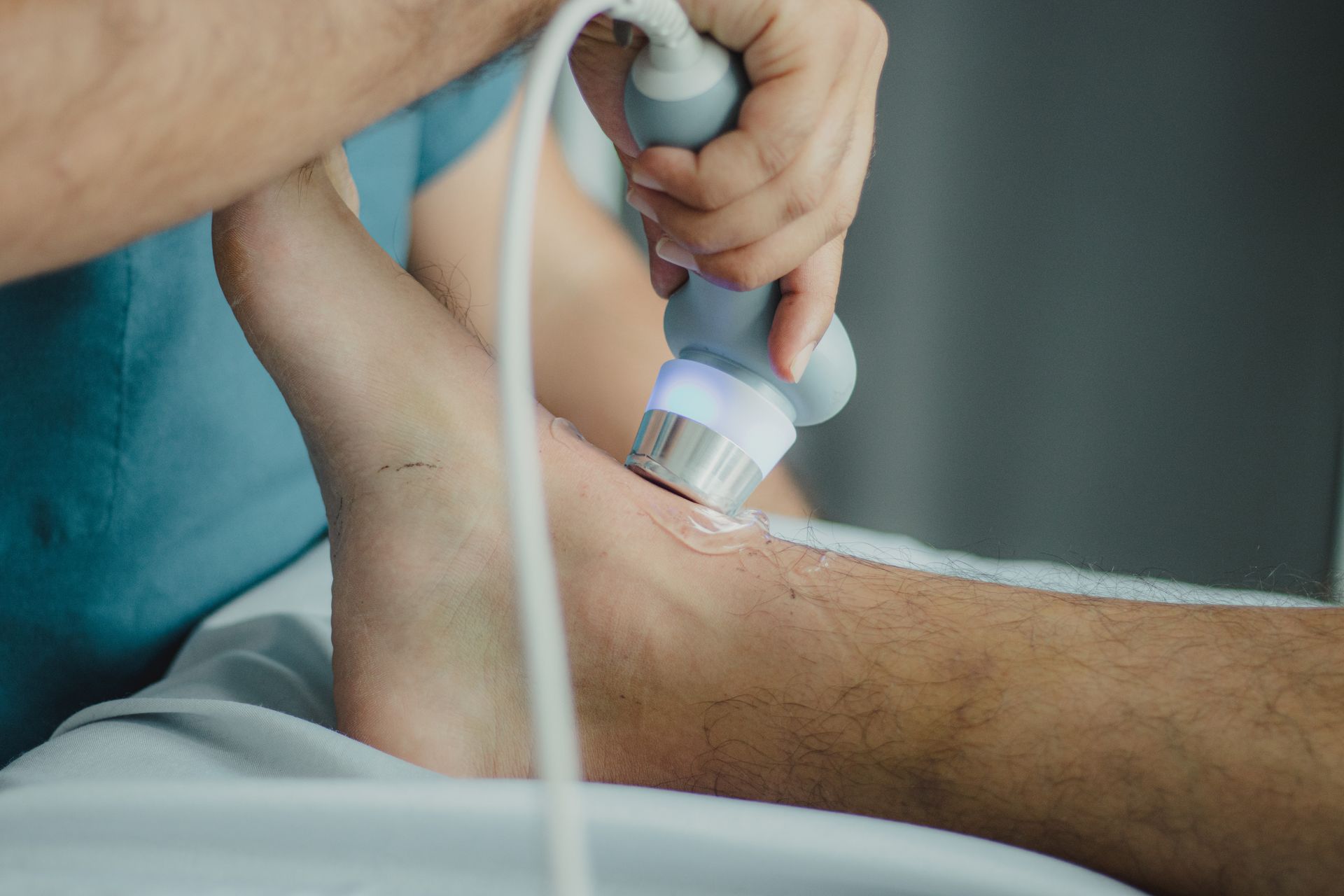
Acoustic Shockwave Therapy (AST): Non-Surgical Pain Relief and Faster Tissue Healing
“AST” Acoustic Shockwave Therapy (also known as Extracorporeal Shockwave Therapy) is a treatment that uses sound waves to help heal injured tissue and reduce pain in patients. The sound waves are directed at the injured area using a special device and penetrate deep into the tissue.

One way that AST can help reduce pain is by stimulating nerve fibers in the affected area. This can have a pain-relieving effect and reduce discomfort in the patient. Additionally, AST can trigger the release of endorphins, which are the body’s natural painkillers. AST can also help reduce inflammation in the injured area. The sound waves can promote the release of chemical mediators that reduce inflammation and promote healing. Finally, AST can promote tissue healing in patients with various injuries, including sports injuries. The sound waves can increase blood flow to the affected area, which can provide more oxygen and nutrients to the injured tissue and accelerate the healing process. The sound waves can also stimulate the production of collagen, which is an important protein for tissue repair and regeneration. Overall, AST is a non-invasive treatment that can help reduce pain, inflammation, and promote tissue healing in patients with various injuries, including sports injuries. It is a safe and effective treatment option that can potentially improve patient outcomes and help them get back to their normal activities faster.
Benefits of Acoustic Shockwave Therapy (AST):
Increased blood flow to the injured area, which can accelerate healing
Stimulated production of collagen, a protein important for tissue repair and regeneration
Reduced pain and inflammation in the injured area
Improved mobility and function of the affected joint or muscle
Non-invasive treatment option with minimal risks and side effects
Potentially faster recovery times compared to traditional treatments
Ability to avoid surgery or long-term use of pain medication
Possible long-lasting pain relief even after the therapy sessions are completed.
References
Furia, J. P. (2018). Extracorporeal shock wave therapy for musculoskeletal conditions. American family physician, 97(6), 385-390. PMID: 29671513
Speed, C. A. (2014). Extracorporeal shock-wave therapy in the management of chronic soft-tissue conditions. Journal of bone and joint surgery. British volume, 96(2), 249-254. PMID: 24493079
Wang, C. J. (2012). Extracorporeal shockwave therapy in musculoskeletal disorders. Journal of orthopaedic surgery and research, 7, 11. PMID: 22512909
Lohrer, H., & Nauck, T. (2014). Acoustic wave therapy in the treatment of chronic proximal hamstring tendinopathy. International journal of sports medicine, 35(8), 664-669. PMID: 24682996
Louie, D. L., Earp, B. E., & Blazar, P. E. (2018). Extracorporeal shock wave therapy for chronic plantar fasciitis: perspectives from a randomized controlled trial. Foot & ankle international, 39(1), 38-44. PMID: 28862594
Hammer, D. S., & Rupp, S. (2015). Extracorporeal Shockwave Therapy in Sports Medicine. Sports Medicine and Arthroscopy Review, 23(4), 201-207. PMID: 26524512


